
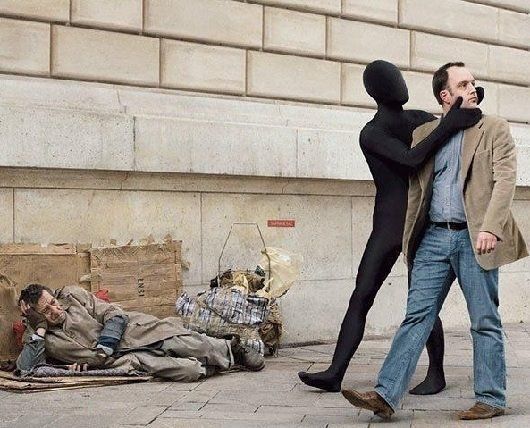
Happiness, empathy and social selfishness: reflections on moral conduct in Utilitarianism
In utilitarian thought, the definition of morality will necessarily derive from articulation between sensitivity and rationality. The most immediate aggregation is with the Hobbesian model, where pain and pleasure are determining characteristics of cognition. The conception of Bentham establishes that nature placed humanity under the dominion of two sovereign masters: pain and pleasure. It is […]

Virtues in relationships
Practicing Virtues in relationships is not always easy. Sometimes we are in a good humor, everything is going OK and everyone is treating us kindly, agreeing with everything we say. Than, maybe we will forget that practicing virtuous is something that has to be done all the time and we don’t realize that there’s an […]

Disaster ethics and the touching case of Thai boys trapped in a cave
Crisis, tragedies and disasters have very particular characteristics of uncertainty and require different relationships and responsibilities for their response and solution, with extremely difficult decision making. The philosopher Naomi Zack (2009) – one of the main references on disaster ethics – clarifies that there are aspects of these events that go beyond the obvious facts, […]

Courage pill for relationships based on virtue ethics
Human relations are predominantly centered on hedonism especially on contemporary days. People usually join a relation in first-place to satisfy their own pleasures and well-being. This is was exposed by Zygmunt Bauman in his book “Liquid Love,”. The author sustains that contemporary relationships cease to be a construction of an “we” and become a cult […]

A possibility of alignment between ethics and finance
Enron Corporation was a world leader in power distribution. Located in Houston, Texas, it employed about 21,000 people. In the year of 2000, before filing for bankruptcy due to accounting fraud, Enron earned $ 101 billion. This is not the first and will not be the last case in which companies are involved in some […]

Business Ethics and the Brazilian Reality
Business ethics has been gaining strength since the 1960s, after various scandals involving fraud, corruption, bribes and bad behavior, showing the need to rethink the organizational practices, which are also charged by society. Corporate ethics include a set of organizational principles, values, and norms that can be derived from individuals, organizational statements, or the legal […]

The Virtue in Daoism
Daoism is a philosophical and religious tradition from ancient China, whose most know work it’s the Dao De Jing, probably wrote by Laozi between 350-250 b.C. The legend says that Laozi was asked by frontier guard to share his wisdom, so Laozi wrote the teachings that are at the Dao De Jing. But maybe the […]
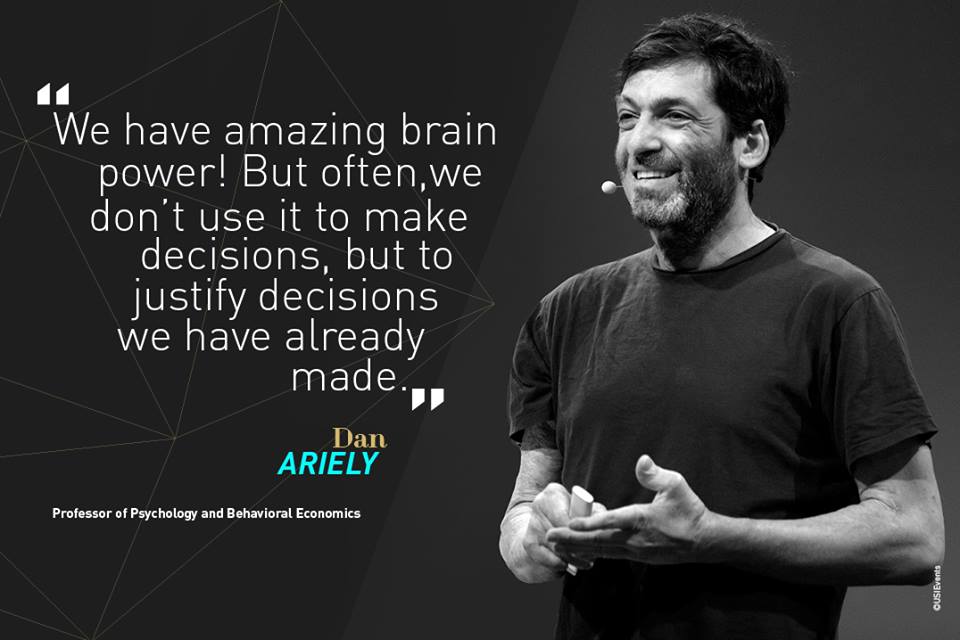
Dan Ariely
Dan Ariely is a senior fellow at the Kenan Institute of Ethics at Duke University. He is also a professor of psychology and behavioral economics at Duke University, where he has been working since 2008. American of Israeli origin, was born in 1967 in New York, became interested in the irrationality of daily behaviors, influenced […]

Morality Policies: What’s the limit?
Public policies have become one of the main ways in which governments interfere in society and modify individual and collective actions in the pursuit of their goals. It is common to think of the different types of public policies from the classification of Theodore Lowi, but several attempts to modify or expand this typology have […]

Virtues and Technology: Forgotten lessons
It was part of the imagery of ancient Greece the distinction between human perfection through the virtues and the technique/technology as a minor activity. The technique was considered a way of “cheating” physical reality, creating artifacts whose mere course of nature would not be able to do, in order to satisfy certain human desires. But […]