

Analysis of Frankenstein (2025) from the perspective of Transcendental Anthropology
Mauricio C. Serafim | 20.11.2025 The film illustrates the conflict between technical production and the personal dimension. The Creature’s misfortune does not lie in its monstrous constitution, but in the systematic denial of fully manifesting its transcendentals (free coexistence, personal knowing, personal loving), a direct result of its creator’s inability to overcome the limit of […]

To Serve the Public, the Right Question Is Not “What to Do?” but “Who to Be?”: Some Counterintuitive Ideas About Public Management
Mauricio C. Serafim When we think of public management, the image that often comes to mind is that of a universe governed by laws, processes, and complex bureaucracy. It is commonly believed that excellence lies in the strict application of rules. However, true effectiveness in public management may not rest in the unreflective fulfillment of […]

O Homem Parentético
Por, Prof. Maurício C. Serafim Vídeo didático criado no Google Notebooklm a partir dos textos:

The AI Revolution in Management: Redefining Professional Value Beyond Automatable Intelligence
By Mauricio C. Serafim (Gemini aided). Based on the article published by Roberto Reis (x.com/RobertoReis), April 14, 2025 It has become commonplace to say that we are living through an unprecedented technological inflection point. However, the reality is that Artificial Intelligence (AI) has ceased to be a futuristic concept and has become an active force, […]

Prudence: The Essential Virtue for Ethical Leadership in Management
José was exhausted. As the new leader of a rapidly growing technology startup, the pressure was immense. Every day brought a new crisis that demanded an immediate solution. There never seemed to be enough hours in the day to truly stop and think things through carefully. José knew that hasty decisions often led to undesirable […]

The issue of the virtues’ unity
Integrity traces back to the idea of “wholeness, perfect condition,” and the word likely emerged in the mid-15th century in the English language (https://www.etymonline.com/search?q=integrity), also potentially meaning “to be whole” or “to be complete.” In Business Ethics, integrity can easily be confused with the long-standing idea of the connection of virtues, which can be expressed […]

Systems theory as an approach to ethics
Systems theory is well known in Administration. Whether in textbooks or consulting projects, it has become embedded in the field in such a way that we hardly notice it today. Emerged in the 1940s in the field of biology, it is one of the most successful theories in its transposition to other areas, such as […]
Selective ethics
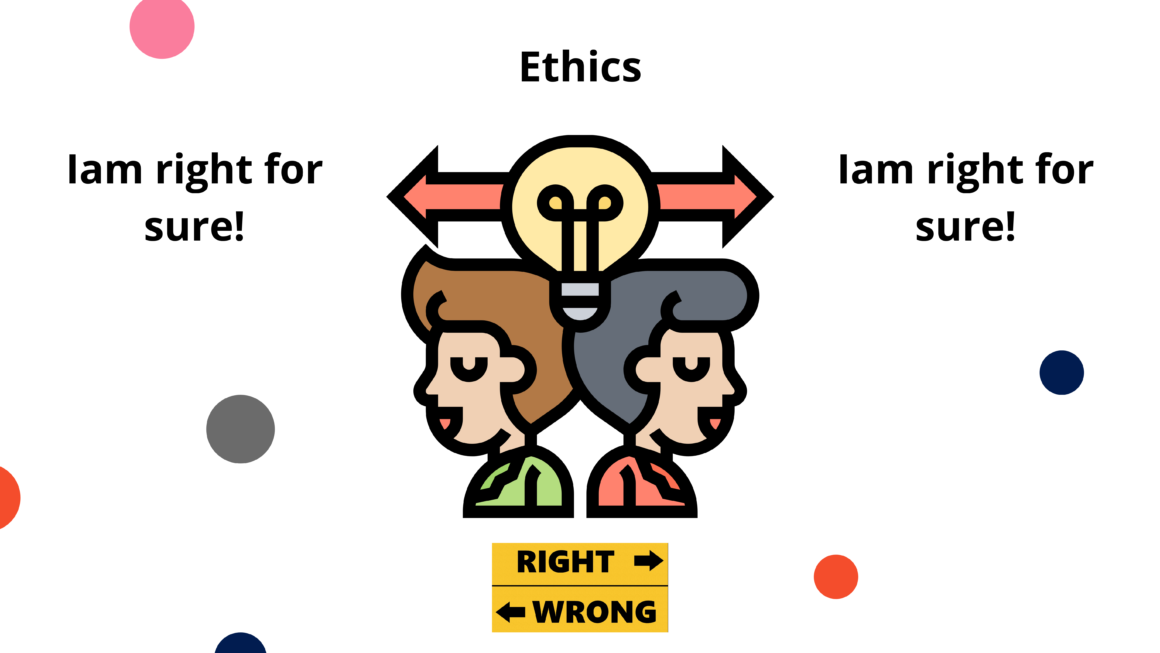
What is emerging (or re-emerging) in our time is the legitimization of a selective ethic according to the categorical attributes into which each individual fits. For this ideology, if someone has the misfortune of falling into a given category, it is enough to be accused of being an oppressor, a potential criminal, and to have […]

The virtue ethics approach in Administration
As stated by the professor of Organizational Theory at the IESE Business School (University of Navarra, Spain), Juan Antonio Pérez López (1912-1996), “science can have no other object than to help human beings make the right decisions”. Such decisions can have a technical or technological support, whose criterion is the adequacy of the means / […]

Lies and underdevelopment
The Spanish philosopher Leonardo Polo (1926-2013) stated in his book Ética: Hacia una versión moderna de los temas clásicos (Eunsa, 2018) that “destroying language is making human cooperation impossible and therefore hindering the development and organization of human work. And he continues: “I often say that underdevelopment is not a consequence of incapacity; underdevelopment is […]